
Careers · Transferable skills·3 min read
From Carpenter to Yacht Crew
Why a skilled trade can be a stronger starting point than you might think
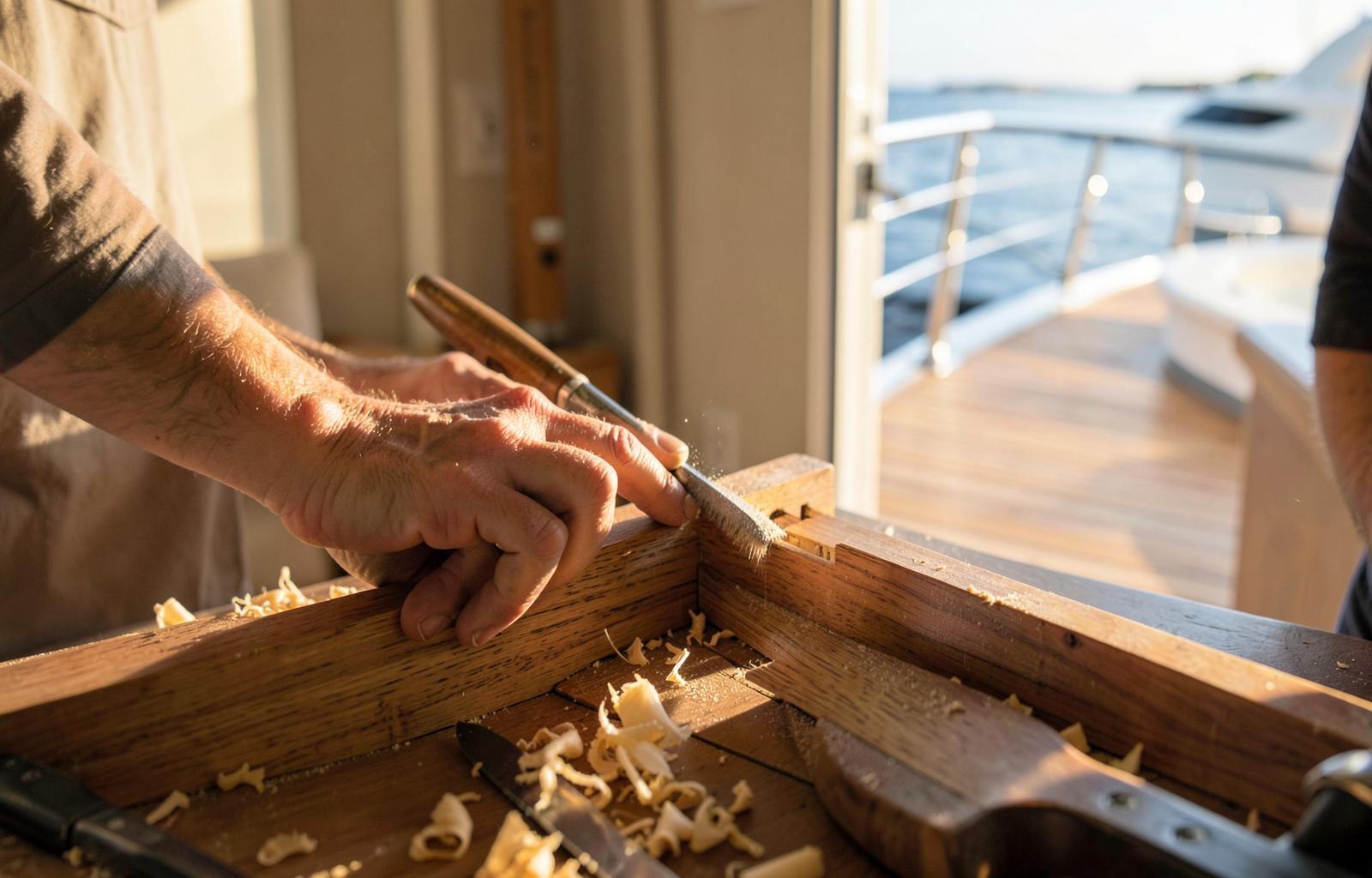
If you've spent years working as a carpenter, stepping into yachting can feel like starting again.
You may know how to build, use tools, solve problems and work with your hands, but you've never worked on a yacht.
That doesn't mean you're starting from zero.
You already know how to work
This may sound simple, but it matters.
A carpenter is used to getting up early, turning up on time and working physically for an entire day.
You work in different conditions. You carry, lift, climb, measure, build and repair. You learn to keep going until the job is done.
Life on deck can be physically demanding too.
The environment is different, but the work ethic isn't.
Practical skills have value onboard
Yachts are complex working environments filled with equipment, machinery, fittings, materials and systems that need constant care.
Someone with a trade background is already comfortable around tools and understands how things are put together.
You know how to measure accurately, work with different materials and use tools and machinery safely. And when something doesn't work as it should, your instinct is often to understand why.
That doesn't mean doing the engineer's or electrician's job.
It means arriving with practical knowledge that can make you a useful person to have around.
Precision and problem-solving
In carpentry, a few millimetres can make the difference between something fitting and something not fitting.
You also learn that things don't always go according to plan. Conditions change, something doesn't fit or a problem needs a different solution.
So you assess, adapt and work out what to do next.
That combination of precision and practical problem-solving translates well into yachting, where both maintenance and presentation can be held to exceptionally high standards.
Safety is already part of the job
Tradespeople work with machinery, power tools, ladders, heights and heavy materials.
You learn to respect risks, use equipment properly and think about the people working around you.
A yacht has its own procedures and safety requirements to learn, but the idea that safety is part of doing the job properly isn't new.
You already understand teamwork
Carpenters work alongside electricians, plumbers, painters and other trades.
Yachts have different departments too. Deck, engineering, interior and galley have their own responsibilities, but everyone ultimately works together.
Knowing how to do your own job while respecting somebody else's is already a valuable skill.
Your trade comes with you
A carpenter entering yachting still has plenty to learn.
Boats are different from buildings, and experience ashore doesn't replace experience at sea.
But you already know how to work hard, use your hands, look after equipment, solve problems, work safely and finish a job properly.
You may be new to yachting. That doesn't mean you're new to work.
Could your trade take you somewhere unexpected?
Your experience ashore may be more relevant onboard than you think.